OEM Advertising
OEM (Original Equipment Manufacturer) Advertising is an emerging facet of performance marketing that targets users at the device level, leveraging pre-installed apps or software by the device manufacturers
What is OEM Advertising?
OEM Advertising refers to the practice of placing ads within the ecosystem of a device manufacturer, such as pre-installed apps, launchers, or even the device's setup process. This method allows advertisers to tap into a captive audience right from the moment they begin using their new mobile device, providing an uncluttered environment for brand messages and promotions.
By integrating ads directly into the device's native experience, OEM Advertising offers a seamless way to engage users, often resulting in higher conversion rates compared to traditional mobile advertising channels. This unique approach enables brands to reach potential customers directly on their mobile devices, offering a high degree of targeting precision and effectiveness. However, this is only restricted to Android smartphones.
Types of OEM Advertising
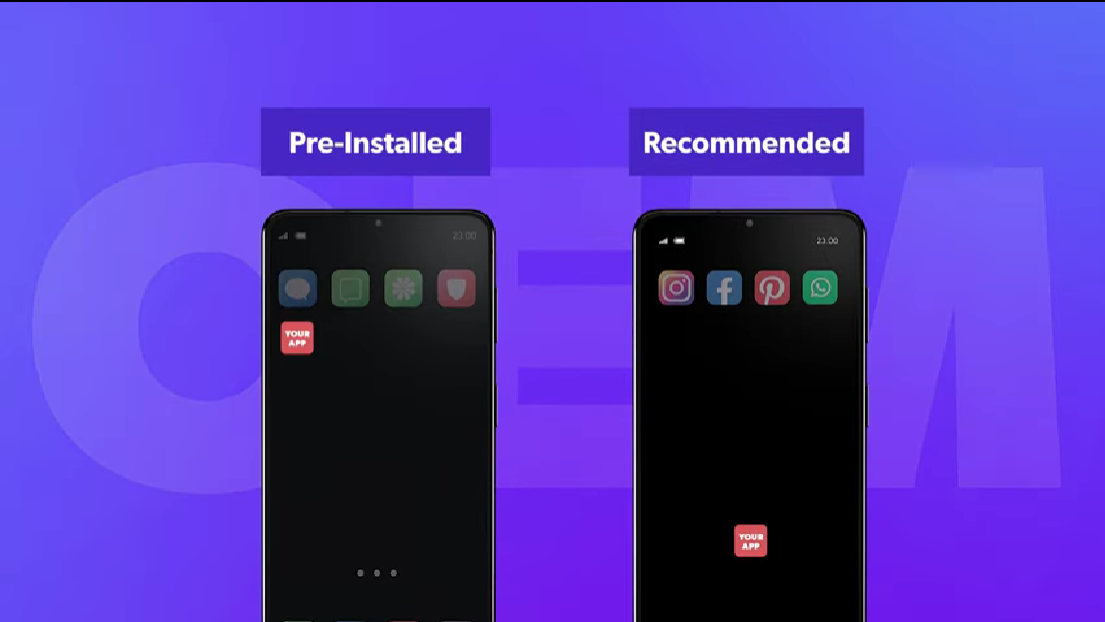
OEM Ads can be in 2 forms:
- Pre-installed apps like the Weather app, Calculator or app stores, which have been installed on the newly purchased devices
- Recommended apps place your app in different ad units within the device, and your app becomes an essential part of the user journey. This model will not only improve brand awareness but also help you reach real and engaging users.
Platforms Allowing Access to OEM Traffic
Several platforms facilitate access to OEM traffic, connecting advertisers with opportunities to display their ads within the device ecosystem. Key players include:
- Integrated Ecosystems: Those integrated via an Android Package (APK) can provide on-device traffic, acting as direct intermediaries between manufacturers and advertisers. The 2 main players here are IronSource Aura and Digital Turbine.
- Device Manufacturer Platforms: Many device manufacturers, such as Samsung, Huawei, and Xiaomi, have their advertising platforms or partnerships that enable OEM advertising.
- Advertising Platforms: They acquire traffic from manufacturers through integration with third-party technology platforms, known as Supply-side platforms (SSPs).
Why OEM Ads are important for Advertisers
The biggest pros of OEM Ads can be their authenticity, which leads to higher user’s trust and conversion rates. According to Business of App, the effectiveness of OEM Ads equals that of organic traffic:
- The Conversion Rate for installing OEM sources can be 10-40%, and in some cases even 85%.
- CTR of OEM sources averages 1-6%, with average in-app rates of 0.15% to 1%.
Other than that, there are still many reasons why OEM is so important:
- Early Engagement: OEM ads allow brands to engage with users from the first interaction with their new device, establishing a connection before users form strong preferences for other apps and services.
- Targeted Reach: Advertising on OEM platforms offers precise targeting based on device type, user demographics, and even geographic location, ensuring ads are seen by a relevant audience.
- High Visibility: Given the less crowded advertising space on OEM platforms, ads tend to enjoy higher visibility, leading to better engagement rates and brand recall.
- Quality User Experience: OEM ads are integrated into the device's native experience, making them less intrusive and more likely to be perceived positively by users.
Put these concepts into practice
See how Airbridge helps teams implement mobile attribution strategies at scale.