Fallback
Fallback acts as a safety net, allowing marketers to maintain engagement and tracking effectiveness even when primary methods encounter obstacles.
What is Fallback?
Fallback in mobile advertising refers to an alternative plan or method activated when the primary strategy fails or is not feasible. This can encompass alternative ad content delivery, tracking mechanisms, or data collection methodologies to counteract issues like ad blocker interference, loss of tracking data due to privacy regulations, or unsuccessful ad displays.
Why is Fallback important?
Fallback strategies are vital for several reasons. They ensure that marketing efforts remain fruitful, maximizing ad spend efficiency by preventing campaign disruptions. Fallback mechanisms safeguard against data loss, maintaining the continuity of user engagement and conversion tracking. This resilience is crucial in the fast-paced mobile environment, where user attention is fleeting, and the success of marketing campaigns heavily relies on the ability to adapt quickly to technological and regulatory changes.
How is Fallback applied?
In the context of mobile marketing, fallback strategies are applied in various ways:
-
Ad Delivery: If a specific ad fails to load—perhaps due to format incompatibility or network issues—a fallback ad of a different format or a more universally compatible version is served instead. This ensures that potential impressions are not lost.
-
Tracking and Attribution: With the increasing use of privacy-enhancing technologies and regulations, fallback mechanisms, such as server-side tracking, come into play when traditional, cookie-based tracking methods are blocked or ineffective.
-
Content and Engagement: For content delivery and user engagement strategies, fallback options might include alternative content paths or engagement methods if the initially intended content does not resonate with the audience or fails to be delivered.
Fallback and Airbridge
MMPs like Airbridge always try to cover as many possibilities as possible to ensure a robust and well-rounded database. That is why you can configure your own fallback path when you create tracking links with Airbridge’s dashboard to make sure your marketing campaigns run smoothly.
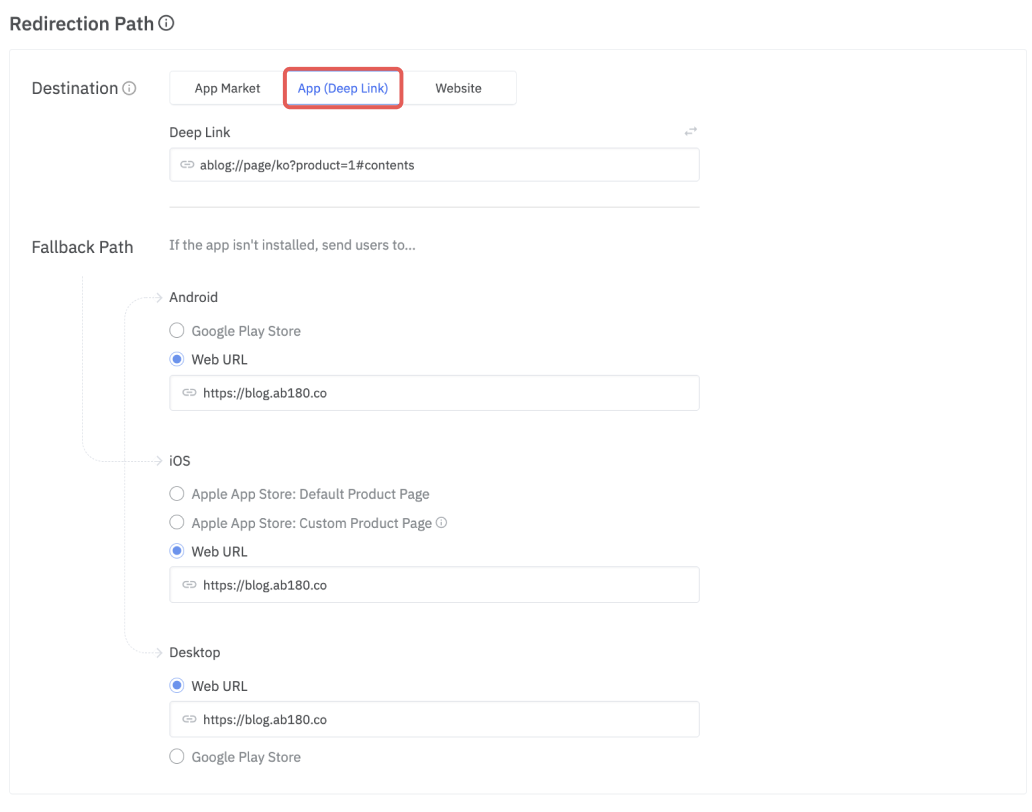
To learn more about how to configure Airbridge’s features, please refer to the guide here.
Put these concepts into practice
See how Airbridge helps teams implement mobile attribution strategies at scale.