Airbridge Pilot & MCP 正式上线。体验 AI 驱动的营销分析。
了解更多关于 Airbridge 的任何问题
回答由 AI 生成,可能不完全准确。
为提升回答质量,对话内容可能会被记录。
In 2026, every extra click is a direct tax on your revenue. If your ad promises a '20% discount' but dumps the user on a generic homepage, you've already lost the subscription.
That’s why a strategic deeplink is no longer just a technical feature. For subscription apps, it directly affects conversion rate, retention, and revenue.
Yet many marketers still ask: Why do deeplinks matter? Or worse, they assume deeplinks are just “smarter URLs.”
In reality, a Deeplink determines whether a user lands exactly where they expect – or gets dumped on a generic homepage and abandons. That single moment shapes onboarding success, paid media ROI, and subscription growth.
In 2026, when acquisition costs continue to rise, precision in user journeys isn’t optional. It’s revenue protection.
📌 Key takeaways
If you only remember three things from this guide, let it be these strategic pillars for 2026:
A deeplink is a URL that routes users directly to a specific page or feature inside a mobile app, bypassing the home screen.
It routes users directly to relevant content inside a mobile app.
Unlike regular web links, deeplinks preserve context. They remember what the user clicked and deliver them to the exact screen tied to that intent.
In practice, this means:
Without a deeplink, users land at the app’s default screen. They must search again. Many don’t.
A common mistake marketers make is assuming that installing the app equals conversion. It doesn’t. The first screen after install often determines whether a user subscribes – or churns.
The difference between a regular link and a deeplink is destination precision.
Web links send users to websites or app stores. Deeplinks hit app content instantly.
But the impact goes deeper than navigation.
.ab-table-wrap { width: 80%; margin: 32px 0 48px 0; font-family: Arial, sans-serif; color: #172033; } .ab-table { width: 100%; border-collapse: collapse; background: #f3f4f6; font-size: 16px; line-height: 1.5; } .ab-table th, .ab-table td { border: 2px solid #222; padding: 18px 16px; text-align: left; vertical-align: top; white-space: normal; word-break: normal; overflow-wrap: break-word; } .ab-table th { background: #f2f2f2; color: #111; font-size: 18px; font-weight: 700; text-align: center; } .ab-table td { background: #f9f9f9; font-size: 16px; } .ab-table td:first-child { width: 25%; font-weight: 700; } .ab-table td:nth-child(2), .ab-table td:nth-child(3) { width: 37.5%; } .ab-table a { color: #2a5bd7; text-decoration: underline; } @media screen and (max-width: 991px) { .ab-table-wrap { width: 100%; } } @media screen and (max-width: 767px) { .ab-table { font-size: 14px; } .ab-table th, .ab-table td { padding: 12px 10px; } .ab-table th { font-size: 15px; } }
Web Links
Deeplinks
Destination
Browser or app store
Specific in-app screen/feature
User Friction
High (downloads, searches)
Low (direct access)
Conversion Impact
Baseline
Up to 2.5x higher retention
(Source: Adapty)
Best For
Awareness
Onboarding, re-engagement
Fallback
None
Web or store (universal links)
From a tactical standpoint, the biggest difference is intent preservation.
Imagine this scenario:
That friction costs revenue.
The revenue impact goes far beyond user convenience. Research reveals more than 90% of mobile time is spent within mobile apps rather than mobile web and app users consistently demonstrate higher lifetime value across industries.
For subscription-based apps, the "Leaky Bucket" syndrome is the primary threat to growth.
In 2026, the cost of user acquisition (CAC) has reached a point where losing a single potential subscriber due to a broken link is a significant financial hit. If your link sends a user to a generic mobile web homepage instead of an in-app checkout, you aren't just losing a click – you are losing recurring revenue (LTV).
A common mistake marketers make is assuming the "Install" is the final goal. For a subscription app, the install is just the beginning.
If a user clicks an ad for "Premium Meditation Tracks" and lands on a generic app store page, the context is lost. They must download, open, and then manually search for that specific track. Most users will simply close the app because of ‘Friction Tax’ and ‘Login Wall’.
The High Cost of the "Login Wall": Subscription apps often require a login. And the 'Web Login Wall' is the #1 killer of mobile web conversions. When a user is directed to the mobile web instead of the app, they are frequently met with a "Please Log In" screen. Since most users do not remember their passwords on a mobile browser, the journey ends there. Strategic linking bypasses the browser entirely, utilizing the app's existing authentication to keep the user "logged in" and ready to convert.
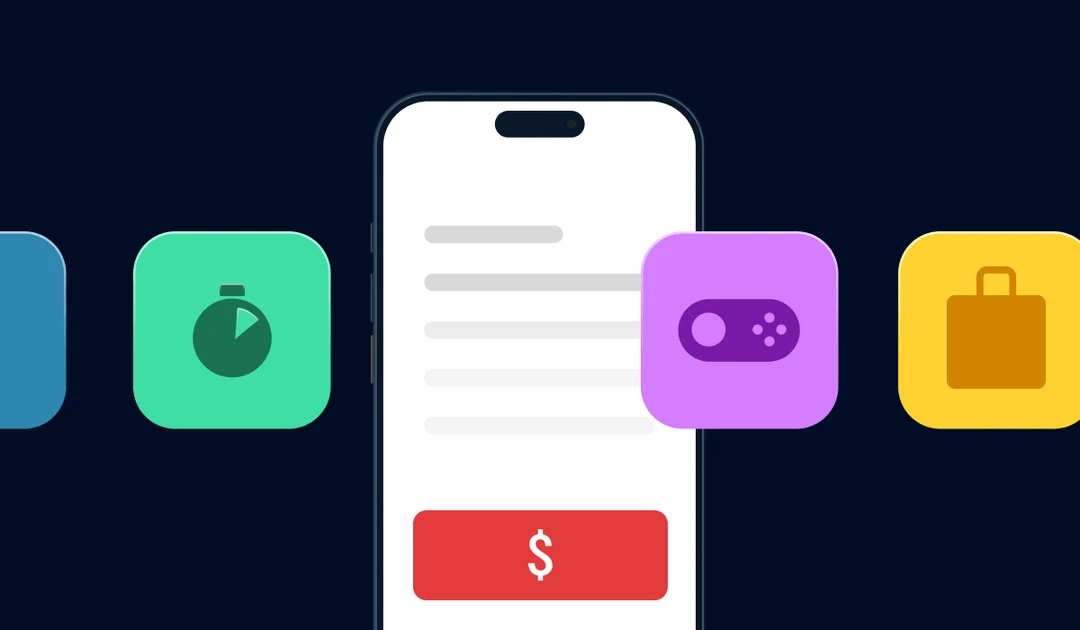
Successful subscription apps treat every link as a personalized entry point. They move beyond basic navigation to create "contextual" journeys that feel like a concierge service for the user.
The first 60 seconds of an app experience determine long-term retention.
Using Deferred Deep Linking, you can carry data through the install process. If a user clicks a "Start 7-Day Free Trial" link, the app can automatically open to the trial signup screen immediately after the first launch – even if the user didn't have the app installed previously.
Read more about Subscription App Onboarding: Get 100% of Users to Your Paywall here.
Win-back campaigns are the lifeblood of subscription models.
When emailing a lapsed subscriber with a "50% Off Renew" offer, the link must point directly to the payment confirmation screen within the app.
Forcing a lapsed user to navigate through the app settings to find the "Renew" button is a guaranteed way to fail.
In 2026, the user journey is rarely linear.
A user might discover your content on a desktop, see an ad on social media, and eventually subscribe on their phone.
Deeplinks act as the glue for these cross-platform transitions, ensuring that a "Swipe Up" on Instagram leads directly to the featured content inside the app environment, not a clunky mobile web view.
Implementation pitfalls occur when deeplink logic doesn’t consistently deliver users to the intended in-app destination.
Here are the most frequent issues subscription teams face for deeplinks:
If the app is not installed, what happens?
Without proper deferred deep linking, users install the app — and land on the homepage. Intent disappears.
Even when the app opens, routing can fail.
Examples:
These errors often go unnoticed until revenue metrics decline.
iOS and Android handle links differently.
If configurations break after OS updates, deep links may revert to browser opens instead of in-app routing.
This is especially risky for subscription apps running continuous paid campaigns.
Deeplinks sit between marketing and engineering.
When ownership is unclear, issues linger.
And while teams debate technical details, conversion rates drop quietly in the background.
Cross-device attribution problems occur when user journey data is lost between click, install, and in-app action.
For subscription apps, this directly impacts budget allocation.
If attribution breaks:
Consider this scenario:
The marketing team sees installs — but not revenue.
That disconnect leads to underinvestment in profitable channels.
The technical complexities of deeplink implementation explain why many subscription apps struggle with broken user journeys despite understanding their importance.
Airbridge Core Plan addresses these challenges by providing enterprise-grade linking infrastructure (but with start-up price) that works consistently across devices, platforms, and attribution scenarios.
It’s designed not just to create links, but to own the entire deeplinking workflow. Below is why Airbridge is the Choice for Subscription Apps:
👉 Meet all features of Airbridge Core Plan first!
The subscription economy in 2026 leaves no room for "broken" experiences. Every link that leads to a generic home screen or a mobile web login is a lost revenue opportunity. By implementing a sophisticated deeplink strategy, you aren't just improving navigation — you are protecting your marketing spend and respecting your user’s time.
The Airbridge Core Plan provides the reliable infrastructure needed to bridge the gap between discovery and conversion.
Don't let technical friction stand in the way of your app's growth.
Explore real successful stories here:
How Fizz achieves ZERO performance loss with Airbridge API deeplinks
How Dabang cut deep link management time by 90% with Airbridge
继续阅读相关主题。