In-app ads: What mobile apps should consider to make money
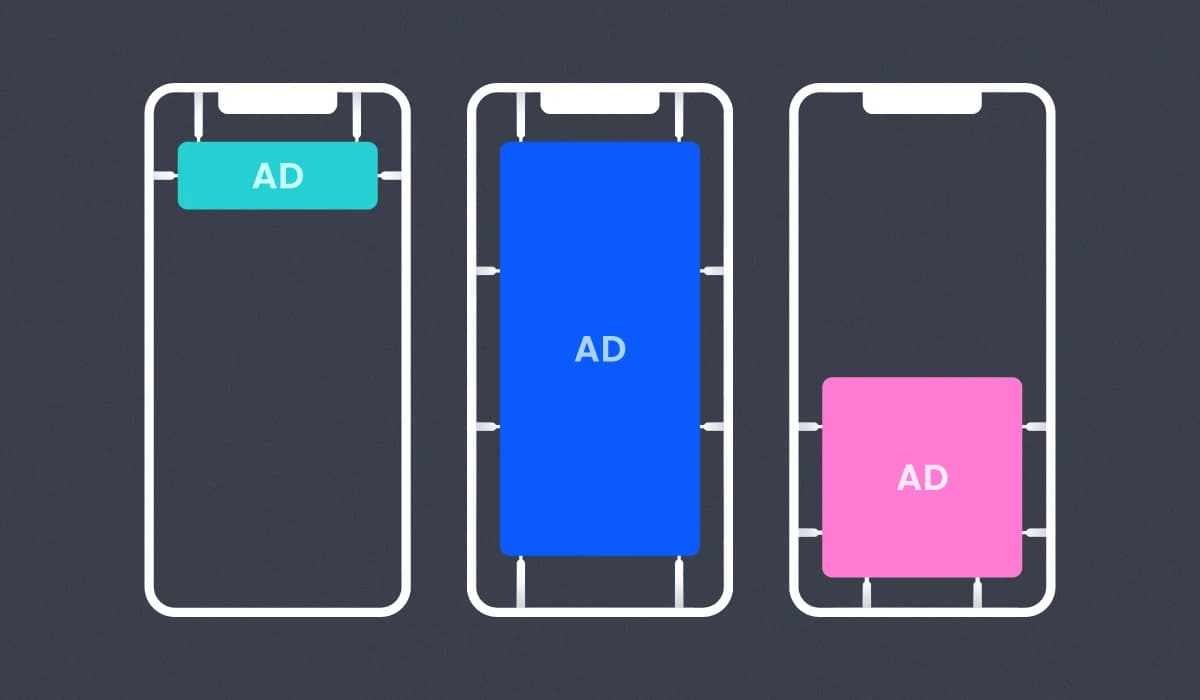
As mobile usage continues to grow, in-app advertising has become an increasingly important way to monetize apps. The global in-app advertising market size, which was already valued at USD 67.7 billion in 2018, is expected to amount to USD 312.5 billion by 2030.
Despite being one of the most common ways to monetize an app, integrating ads into an app is not necessarily easy as it requires a delicate balance. Ads bring income, but they can also negatively impact the user experience if they are intrusive, irrelevant, or too frequent.
Then, how can app developers make smart moves regarding their in-app ads? As in any other problem-solving process, the key is to evaluate available options to determine what is desirable and what is not. This blog post is thus dedicated to those looking to explore different types of in-app ads and figure out what's best for them. Without further ado, let's get started!
What is in-app advertising?
In-app advertising is a form of mobile advertising that targets users while they are using an app on their mobile device. In-app ads come in various formats, which offer different levels of engagement and interactivity with the user.
By displaying ads to users, app developers can earn money from advertisers who are willing to pay for ad space. At the same time, in-app advertising can provide a way for advertisers to reach their target audience in a more effective and engaging way, as users are more likely to engage with ads catering to their interests.
The various types of in-app ads
Below are some of the most popular formats of in-app advertising and examine the pros and cons of each.
Banner ads
Banner ads are small rectangular images that are usually embedded at the top or the bottom of the device screen, alongside the app's content. It is a long-standing form of display ad that many mobile users find familiar. Like a digital billboard, banner ads can either be static or dynamic.
Because they are always visible, even when users are interacting with the app, banner ads are considered a cost-effective way of communicating information about the advertiser. You can also place them on any in-app page of your choice as they do not interfere much with the user flow.
However, this implies that banner ads may not be very good at capturing users' attention. Users may become too accustomed to viewing banner ads that they might disregard them without even realizing. Hence, a great banner ad utilizes eye-catching visuals, concise copy, and a strong call to action to generate clicks.
Banner ads work well for apps with a lot of content, such as news apps, where users spend a lot of time scrolling through articles or videos. Theywork for apps that are not highly immersive or interactive as well, such as weather or finance apps, where users check the app for quick updates.
Interstitial ads
Interstitial ads are full-screen videos or images that appear at natural transition points in the flow of an app, such as when a user completes a level in a game. Upon seeing the ad, the user can either tap on it and proceed to its destination or exit it and return to the app.
Interstitial ads are great for apps with linear user experiences, like gaming apps, fitness apps, and productivity apps. They can also work well for apps that are designed for long sessions, such as music or video apps, as users are more likely to engage with ads when they take a break from the content.
Thanks to their size, interstitial ads have the potential to deliver high impressions and click-through rates. Yet, if interstitial ads appear too frequently, they may hold back users from enjoying your app. One study found that interstitial ad viewers spent 22% of their time looking for the X button. It is therefore critical to avoid including more than one ad between every two user actions. You should never place them during key moments of user experience.
Native ads
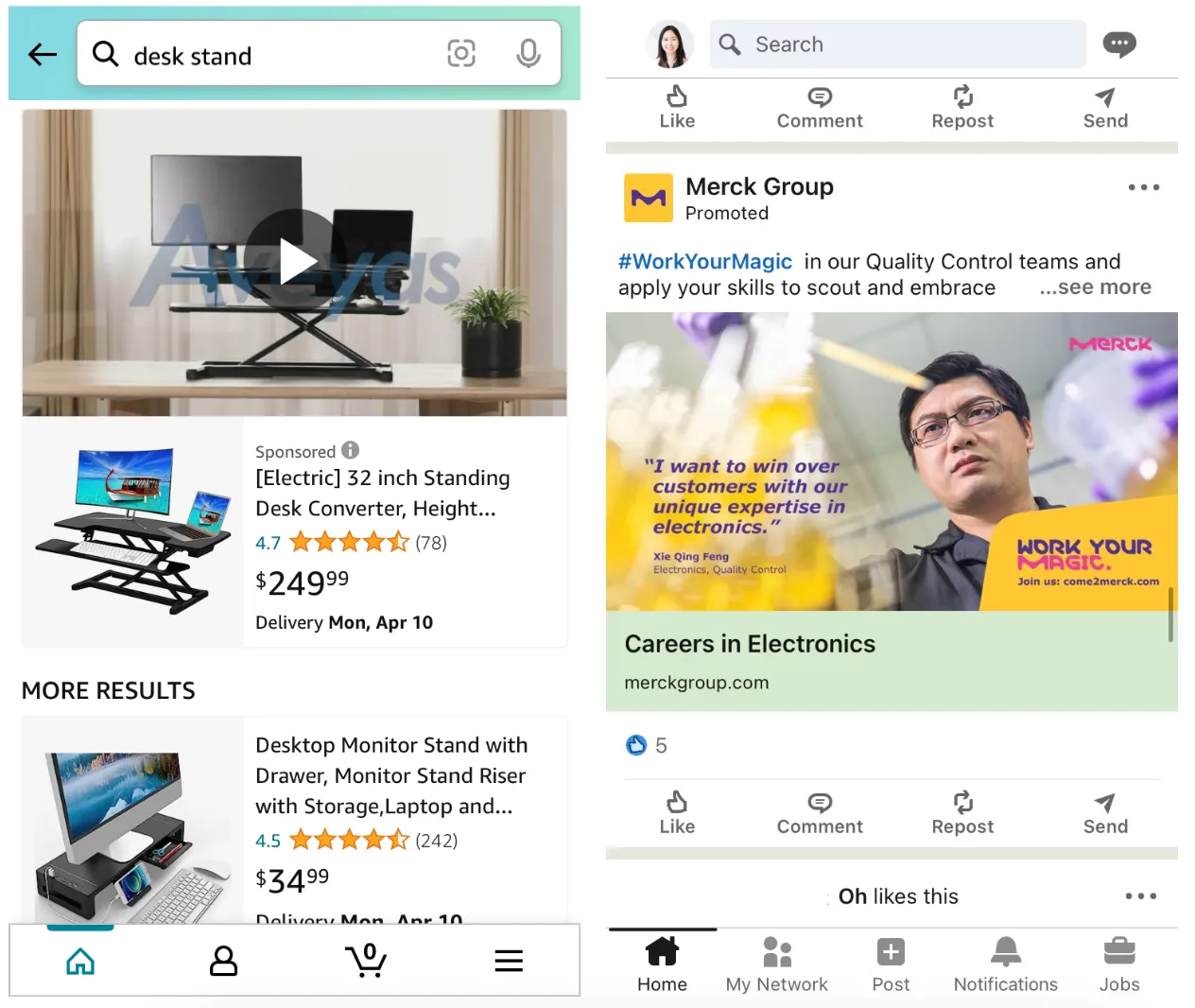
Native ads are designed to match the look and feel of the app's content. Their goal is to blend in seamlessly with the environment in which they are displayed, but still grab the attention of users scrolling down the mobile screen.
For example, you might have seen content that is marked sponsored in your social media feed. It fits naturally alongside other organic posts that sometimes you do not even notice that it is not from your friends. Shopping apps are another case where native ads can be particularly effective. They allow advertisers to showcase their products in a way that feels relevant to and integrated with the shopping experience.
Native ads are known to be less disruptive than banner or interstitial ads as they are interwoven with the in-app page. In fact, a report revealed that native ads register an 18% higher lift in purchase intent than banner ads, meaning that users are more likely to convert after engaging with native ads. In other words, native ads are capable of providing customized experiences that drive installs.
Yet, you should never forget that native ads should promote content, products, or services that align with your app's audience. The placement also needs to be thought through because the ad's content should be related to the flow of specific in-app pages.
Rewarded video ads
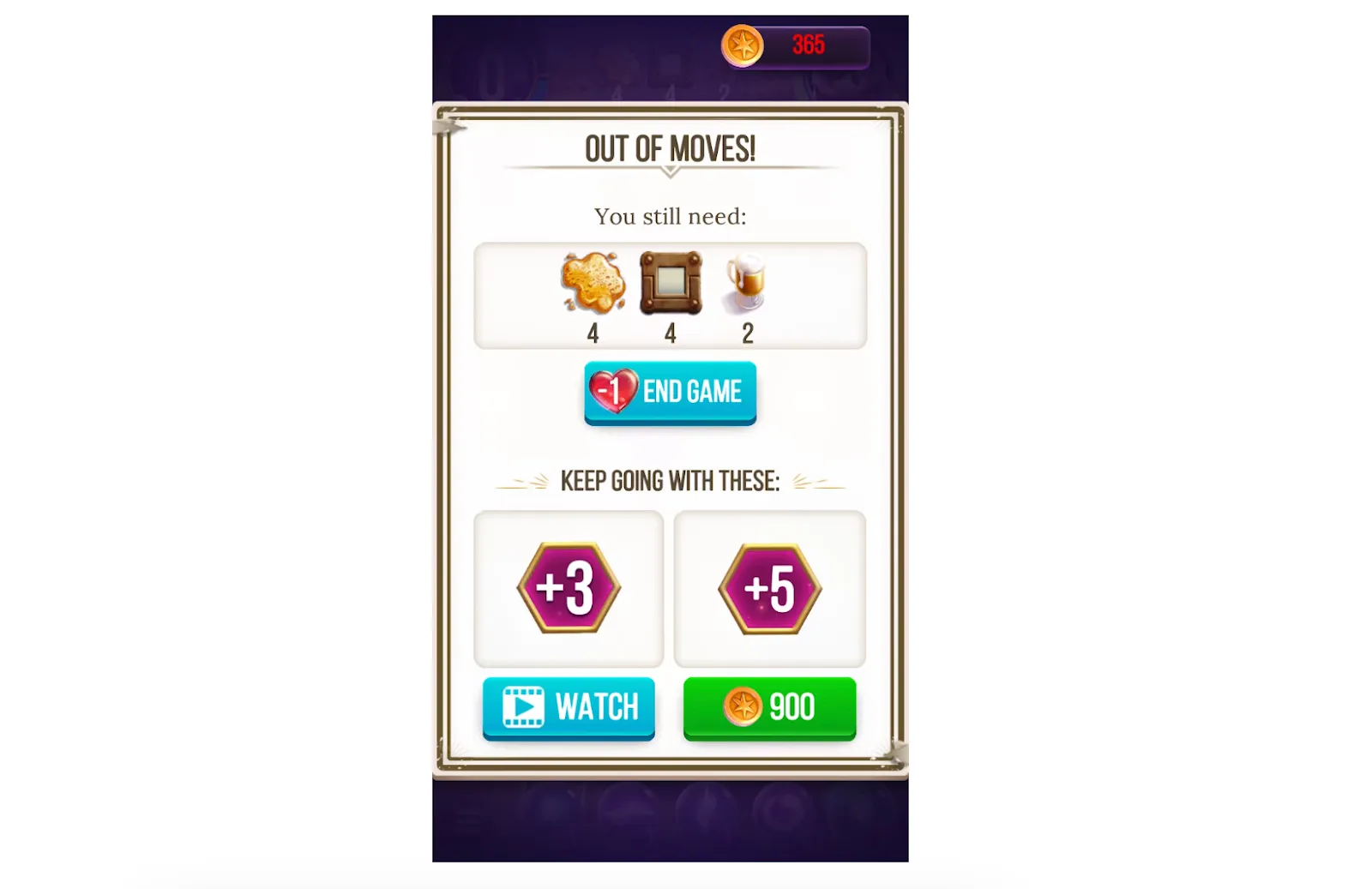
A perfect combination between video ads and reward ads, rewarded video ads have a clear value exchange: the users watch an ad, and the app gives them a clear incentive for paying their time and attention.
Without a doubt, rewarded video ads work great for gaming apps because of the tangible benefit expected in return, namely, extra lives, game currency, and power-ups. Entertainment apps that offer users a limited selection of free content can also use rewarded video ads to give users access to more premium content in exchange for watching an ad.
Usually, users have the power to choose whether to watch a rewarded video ad, and this opt-in structure allows these ads to be less likely to affect user experience. Even more, rewarded video ads can significantly increase user retention and engagement, ultimately boosting revenue. This is especially true if you upgrade the reward for watching the ads for multiple days in a row.
However, like any other type of ad, rewarded video ads should be used sparingly. A good rule of thumb is to display one rewarded video ad every two to three sessions or after the completion of a natural break in the app's content, such as after the completion of a level in a game.
Playable ads
Playable ads are interactive ads that allow users to try out an app before calling them to install it. These ads are effective in acquiring high-value users because they give potential users a chance to gauge their interest before making a commitment.
Playable ads are primarily associated with gaming apps and indeed, the most commonly found type of playable ads is mini games. Still, these ads can also be used for non-gaming apps that are visually driven, interactive, or experiential.
For example, a travel app could use a playable ad that allows users to "explore" a destination or hotel by swiping through a series of interactive images or videos. Similarly, a fitness app could use a playable ad that allows users to "try out" a workout by performing interactive exercises or following along with a virtual trainer.
Which type of in-app ad should you give a go?
Now that you have a better understanding of the strengths and weaknesses of different in-app ad formats, it's time to decide which one to implement in your app. As an app developer, there are several factors to consider, such as the following.
- User experience: One of the most important considerations when choosing an ad type is its impact on the user experience. You want to choose an ad format that doesn't interrupt or detract from the user's experience with your app.
- App content: Another factor to consider is the type of content in your app. For example, if your app is heavily focused on video content, you may want to consider using video ads that will feel more seamless within the app.
- Audience: Your app's target audience also matters. Certain ad formats may be more effective with certain demographics or user behaviors. For example, if your app is targeted at younger users, interactive ad formats like playable may be more engaging.
- Revenue goals: Ultimately, the goal of implementing in-app ads is to generate revenue. You'll want to choose an ad format that will help you achieve your revenue goals without sacrificing user experience or app quality.
- Ad network support: When choosing an ad type, make sure that it is supported by the ad network you are working with. Different ad networks may offer different ad formats, so it's worth doing some research to find the right fit.
Maximizing Revenue Without Compromising User Experience
In-app advertising has become a crucial part of mobile app development as it provides a reliable revenue stream while offering users free access to the app's content. However, you must carefully consider the types of in-app ads that you use, their placement within the app, and their frequency to avoid negatively impacting the user experience.
Keep in mind that you do not have to stick to a single type of in-app ad. By using a combination of ad formats, you can generate revenue from multiple sources while ensuring that the user experience is not negatively impacted. Additionally, developers should continuously test and optimize their ads to ensure that they are effective and enhance the user experience.
Ultimately, the goal is to craft a strategy that enhances the user experience while still generating revenue for your app. When in doubt, come back to this blog post or Airbridge blog for tips and guidelines to rely on.
准备好革新您的移动增长了吗?
了解 Airbridge 如何帮助领先品牌衡量和优化每个触点。